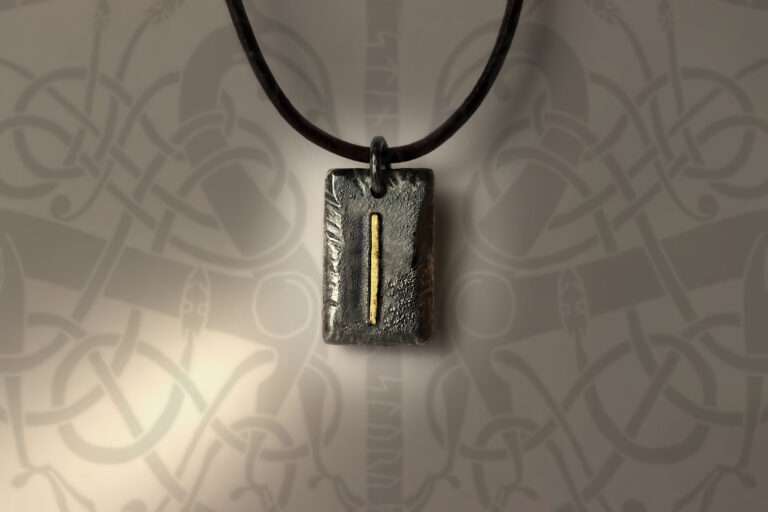
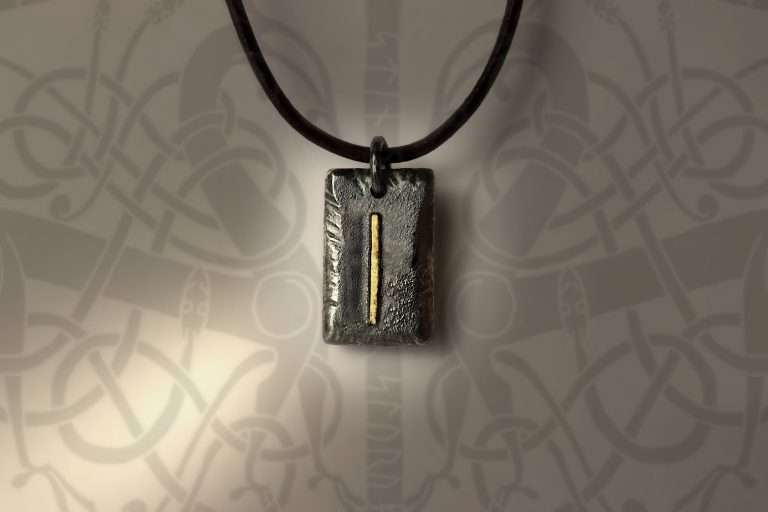
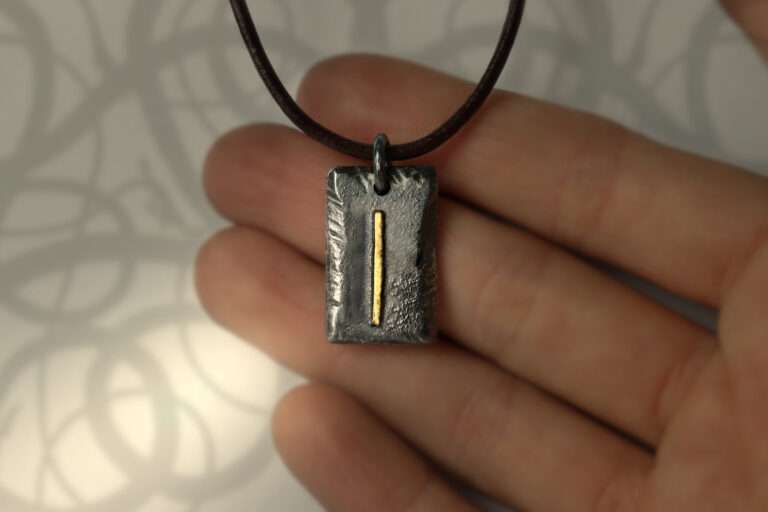
Íss

Íss in old Norse, representing the viking rune letter I, and isaz in proto-Germanic elder futhark means ice. Íss represents stillness, stagnation, and the frozen state of winter. Íss is a reflection of ice’s dual nature: a serene yet treacherous force. It embodies the profound silence of the frozen expanse, the contemplative pause before action.
At kveldi skal dag leyfa,
konu, er brennd er,
mæki, er reyndr er,
mey, er gefin er,
ís, er yfir kemr,
öl, er drukkit er.At night praise the day,
a wife when she is burned [buried],
a sword when it has been proven [in battle],
a maiden when she is married,
ice when you have crossed,
beer when it has been drunk.
Íss signifies the need for patience, introspection, and inner reflection. It prompts us to embrace moments of stillness and solitude as opportunities for self-discovery and personal growth. It symbolizes the frozen state of the subconscious mind, urging us to look deep within our self to uncover hidden truths and insights.
Íss reflects the importance of embracing periods of stagnation and introspection in life. By embodying the energy of íss we don the mantle of the philosopher, navigating the silent corridors of thought with the measured pace of the contemplative. It is a reminder that in the heart of stillness lies the seed of action, that in the depth of winter’s embrace we are invited to ponder our direction and purpose. We can cultivate inner peace and clarity amidst life’s uncertainties, allowing space for inner transformation and personal evolution to unfold.
Íss reminds us to trust in the natural rhythms of life and to have faith that growth and renewal will emerge from moments of careful stillness and introspection. We are called to honor the silent spaces between our actions, to find within the cold a friend to our deliberations, and to emerge from introspection with the clarity of ice.
-

 Quick View
 -
Quick View