
Viking Meditation: Útiseta's Path to Modern Clarity and Connection
In the serenity of the Nordic landscapes the Vikings developed a unique form of meditation, known as Útiseta. The practice allowed them to attune to the natural world and their inner selves – seeking guidance from the spirits and from nature. The old Norse ritual directly translated as “out-sitting” was a custom usually believed to have been undertaken as a part of seidr, or magic, where the practitioner would sit outside, typically at night, likely in an attempt to seek wisdom or prophesize. In the chaos of our modern existence, Útiseta still offers a beacon of peacefulness, guiding us towards a deeper connection with the environment and possibly a clearer understanding of our place within it.
-

 Velg alternativ Dette produktet har flere varianter. Alternativene kan velges på produktsidenQuick View
 -
 Quick View
 -
Quick View
-
Quick View
-
Quick View
-
 Quick View
 -
Quick View




Literary sources and historical context
A surprisingly unknown custom, it has been attested multiple times in old Norse poetry and literature:
From Völuspá, 28:
Ein sat hon úti,
þa er inn aldni kom
yggjungr ása
ok í augu leit.
Hvers fregnið mik?
hví freistið min?
alt veit ek, Óðinn!
hvar þú auga falt:
í inum mœra
Mímis brunni;
drekkr mjöð Mímir
morgin hverjan
af veði Valföðrs.
Vituð ér enn eða hvat?She sat alone outside,
when the old one came in,
the terrible/pensive Æsir
and looked her in the eyes.
What do you want to know from me?
Why are you looking for me?
I know everything, Odin!
where you hid your eye:
in the esteemed,
well of Mímir;
Mímir drinks mead
every morning
from Valfader’s guarantee.
Have you learned enough or what?
From Hákonar saga herðibreiðs, 16:
Svá segja menn, at Gunnhildr, er Símon hafði átt, fóstra Hákonar konungs, léti sitja úti til sigrs Hákoni; en þat vitraði, at þeir skyldi berjast við Inga konung um nótt, en aldrigi um dag; kvað þá hlýða mundu.
Men say, that Gunnhild, who had been married to Simon and raised King Håkon, sat outside, so that Håkon would win; it was revealed to her that they should only fight against King Inge at night, and never during the day; then it would fare them well.
From Orkneyinga saga, Bardagi Paals jarls ok Aulfuis:
Sueinn var mikill madr vexti ok sterkr suartr ok vhamingiusamligr hann var forn miok ok hafdi iafnan vti setid.
Svein was a large and strong man, black, and unfortunate with looks and he had often sat out.
Now, in the above quotes we get some idea of the different reasons and implications attached to utiseta.
In Völuspá, the völva, a kind of seeress, has been practicing útiseta and through the practice has gained knowledge of where Odin has hidden his eye, i.e. she has attained knowledge of the past. In Sagan af Hákoni herðibreið, Gunnhild sits outside in an attempt to help her foster-son, and by peering into the future the ritual reveals to her that in order for her foster-son to win, they can only fight at night. So we know that the ritual enables the practitioner to attain knowledge both of the future and the past.
In the last quote from Orkneyinga saga, there is no particular results described from the practice. Reading from context however, the description is used about Svein, who is said to have been a revered bodyguard (hirdmann) of the earl. He is tall, strong and often goes on raids in the summer. In other words he is considered a formidable fighter and the addition that he often practices utiseta seems to help enforce his image as a dangerous warrior and is added to additionally instill fear or reverence for him.
However, based on the above sources we unfortunately still lack an understanding of the actual ritual and what it entailed.
Likely ritualistic practices
Since the corpus of available information about utiseta is very limited we have very little actual facts about how the ritual was performed. However, we can try to infer some information about likely characteristics based on our knowledge of viking society as well as modern Scandinavian folk tales.
Performance
One of the few attestation of the performance of a ritual similar to utiseta comes from the Færeyinga saga. Even though the ritual is not called utiseta it has characteristics similar to it, where Trond is performing a ritual to raise the spirit of his friends from the dead to find out how they died:
Þrandr hafde þa latit gera ellda mykla j elldaskala ok grindr fiorar lætr hann gera med fiorum hornnum ok .ix. ræita ristr Þrandr alla uega vt fra grindunum. en hann setzst a stol mille ellda ok grindanna. hann bidr þa nu ekki vid sig tala ok þeir gera suo. Þrandr sitr suo vm hrid […]
Trond made a large fire in the firepit. Then he put four fences together with four corners, carved nine squares around the fences. He sat down on a chair between the fire and the fence. He said now that noone should talk to him and noone did so. Trond sat like this a while […]
It should be noted that different translations of this text have been suggested. Most notably there are question surrounding the phrase
ok .ix. ræita ristr Þrandr alla uega vt fra grindunum
and it’s meaning. Directly this sentence translates to
and ix (roman numeral 9) lines carved Trond all ways out from the fences.
As such, the direct interpretation would have been that he drew lines out from all sides of the fence. However, the meaning of “ræita” has in Icelandic and other texts been referring to a marked off space, i.e. a square or rectangle (ref the Norwegian words for square, “rute”). Even still, we cannot be perfectly certain how the lines on the ground were drawn, and the ambiguity of the text and old Norse grammar gives rise to 3 likely designs:
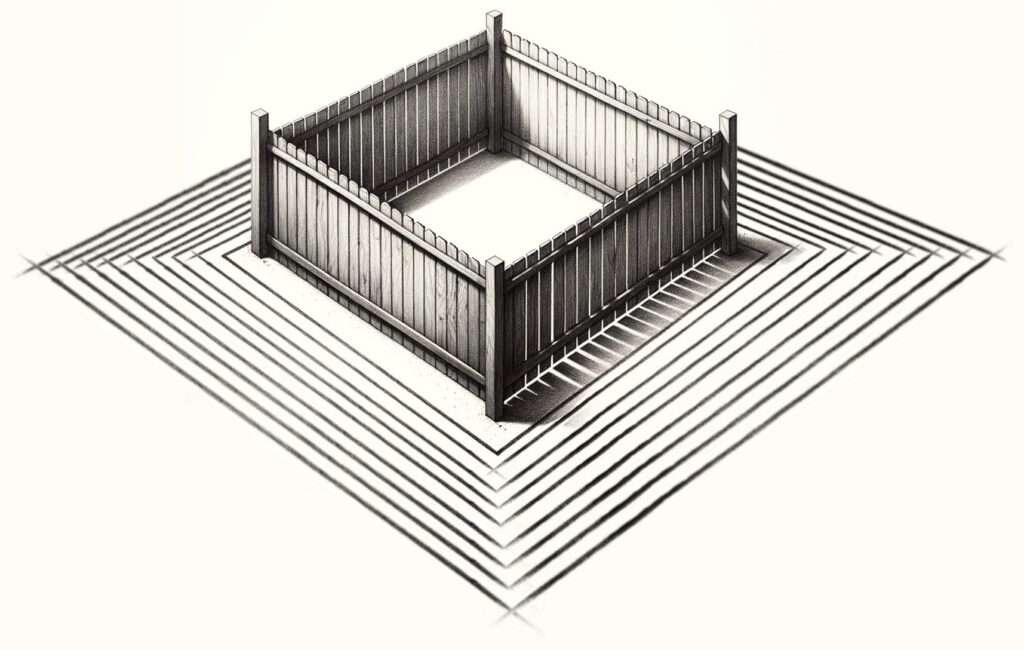
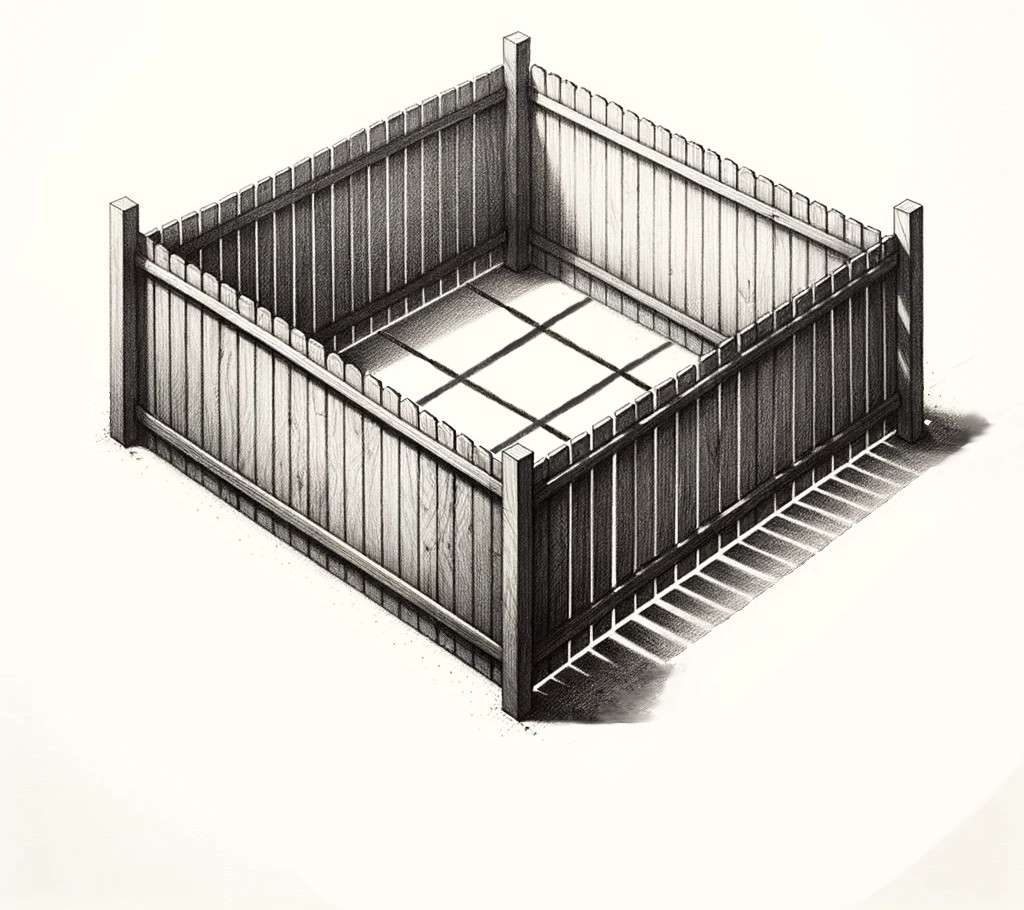
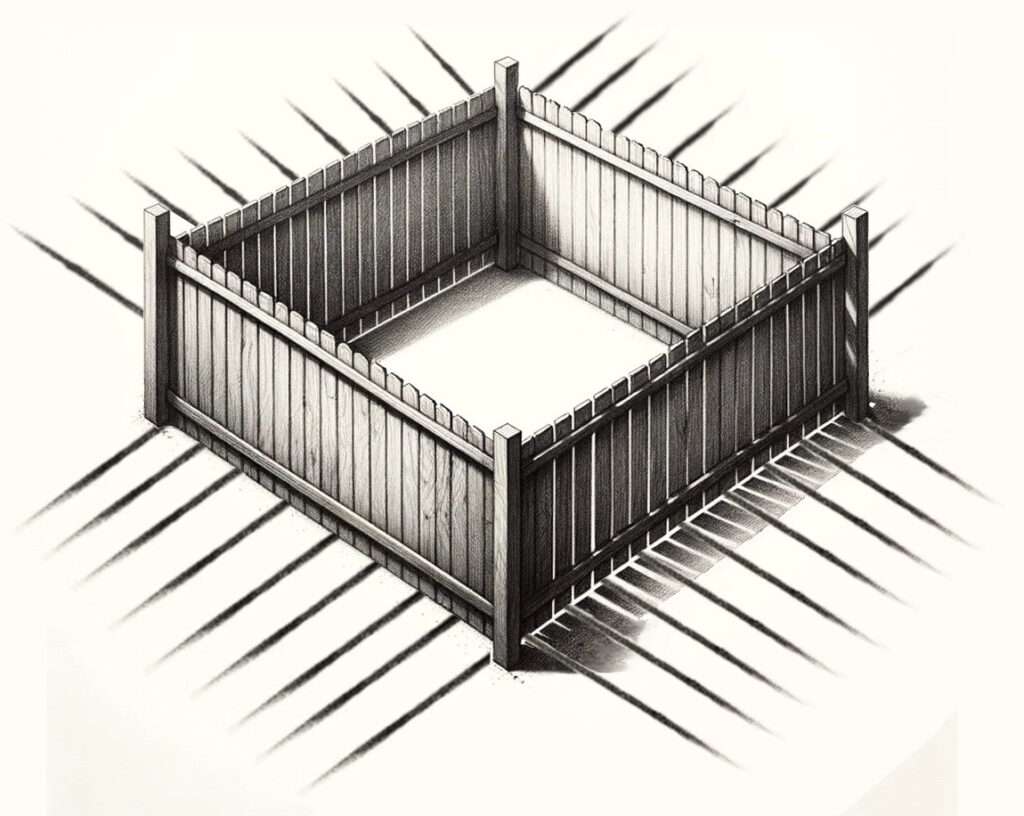
The most likely design is however the first suggested, where the squares work as magic barrier, similar to the fence. For a deeper discussion exactly about this the interested reader can look up Peter Foote’s 1964 article from Fróðskaparrit.
The nine lines drawn also have strong ritualistic meaning in old Norse Mythology. Note above that only the first and second illustration actually creates a sigil consisting of nine symbols. Illustration three creates 36 lines, unless the lines radiating outwards were drawn non-symmetrically, and illustration two only has four lines drawn. Illustration one also has more similarities with later burial practices, where fences and borders were drawn around graves to keep the dead from waking up and becoming “draugr”.
Trond then sat between the fence and the fire, and then he waited for the dead to rise.
Even if this is not the actual ritualistic practice performed by the Vikings while engaging in utiseta, it can provide a suggestion of the symbolic practices that could have been employed during the performance.
Location
From archaeological evidence, bogs, marshes and wetlands have been location for the deposition of artifacts since long before the viking age. Such artifacts have often been interpreted as having symbolic and religious value, meaning the deposits are interpreted as being offerings. There is also historical entities that have been said to live in bogs or wetlands in Scandinavian oral tradition, such as nixies, which might have been entities the performer of the ritual wanted to call upon.
Another location with supernatural connotations in old Norse and Scandinavian folklore is lakes, waterfalls and other bodies of water. For example the being fossegrimen in Norwegian or Strömkarlen in Swedish, who can sometimes be found in waterfalls, or the marmennill, a merman believed to be able to peer into the future in his own right, could likely be called upon to help guide your actions.
Water also holds a special belief in current society as a source of calm and peace, and a symbol of both life and mystery, which likely also held true for the vikings who depended on the sea intimately.
Another sacred location were the burial mounds. The sacred implication of these have lasted from old Norse Viking times all up until today. A common practice was for whoever built a farm to be buried in a burial mound on the property. The belief was that the spirit of the person buried in the mound would protect the farm and the people on it, known as a haugbonde or haugbu, meaning a “mound farmer” or “mound resident”. It is very likely that the practitioner of utiseta, such as a volva or seidkona, would try to invoke the local spirits in their attempt to peer into someone’s future. For more information about the importance of volvas and their impact, see our blog posts on women in viking society.
Like mentioned above, the burial practices of early Nordic people often involved drawing barriers around graves. Similarly all kinds of natural and man-made barriers were believed to contain spirits and supernatural forces. Roads, rivers, fences and gates etc were generally believed to stop spirits from crossing and therefore spirits would also gather at these places. This idea goes far beyond the vikings and old Norse ideas, where for example vampires cannot enter a house – often specifically they are believed to not be able to step over the door frame – unless invited in by the owner. If a practitioner of utiseta would like to call upon the spirits, sitting near gates, fences and roads would have been good places. This has also been suggested by de Vries, who specifically notes the idea of sitting at crossroads.
Possibly the most interesting character from modern Scandinavian folktales related to our knowledge of utiseta might be the hulder or huldrefolk – a forest spirit often thought to be associated with the idea of elves, acting as a protector of nature. The hulder is a female being believed to have evolved from the volva Huld, mentioned in several old Norse sagas, including Ynglinga saga. In Icelandic tradition a similar being is known as the “Huldufólk”, a supernatural being found in nature which inhabits a parallel world to ours. Many of these characteristics are similar to the old Norse vættr, vættir, or maybe most specifically the landvættir, meaning “land-spirits”. Like the hulder and huldufólk, the landvættir were protectors of nature, and an obvious reflection of the Vikings’ reverence for nature, recognizing the spirits’ role in safeguarding the prosperity and well-being of the land and its inhabitants. When arriving in new lands the Vikings would remove the dragon heads from their ships when approaching so as not to scare or provoke the landvættir.
Since your life to a large degree was determined by the forces of nature, knowing if the nature spirits would treat you favorably was a definite indicator of how your future would play out. To call upon the vættr was likely a tool employed to peer into the future. Therefore to sit alone in forests or other places inhabited by these spirits would have been likely locations for the practice.
The disappearance of the ritual
The disappearance of utiseta can be traced to later occurances of the ritual in the old laws of Scandinavia, where for the most part it is banned. From Landslog & réttarbǿtr – Magnus Lagabøters landslov, IV Mannhelgebolken, chp. 4:
Menn þeir er lata lif sitt firir þŋfsku latir eða utilego hvart sem þeir ræna a skipum eða a lande oc sua firir morð oc fordæðo skap oc sua spafarar allar oc utisætor at ueckia troll upp oc fremia með þui heiðni
The men who give their life to thievery or robbery, whether they rob on ship or on land, and equally for murder and witchcraft and all kinds of sorcery and for “outsitting” in order to wake trolls and this way promote paganism
Gulaþingslög, 32:
oc sva firi morð oc fordæðo skape. oc utisetu ac vekia troll upp. at fremia heiðrni með þvi.
and equally for murder and sorcery and for “outsitting” to wake trolls or promote paganism
Note the similarity between these two quotes. The same wording appears multiple times, with small variations, but the gist is that utiseta to “wake trolls” or to “promote paganism”, would in most circumstances be punishable by exile or death.
From this it is clear that ustiseta was a practice strongly associated to old religious practices. Also it is obvious the practice must have been quite common and at least well-known even among normal people for there to have been a law written to forbid it.
Equally, it makes it clear why the custom died out. The question arises as to what would constitute “waking trolls”, but promoting paganism might have had a lower bar for offending somebody. If there was a likelihood of being accused of a crime punishable of death, whether the practice was believed to actually help you peer into the future or past or if it simply was some for of meditation, you would have been reluctant to perform it. It might also explain why we know nothing about it, since you would definitely not have made any written evidence of your experience performing it and unlikely also to have taught it to others.
It should be noted that the banning of utiseta is evidently related to the introduction of Christianity. It was unlikely for the church to accept any practice that allowed spiritual development outside the control of the church. So even if the practice was simply a form of meditation and a way of achieving inner understanding, it was not in the interest of the church to permit it. Equally, it might have seemed dangerously similar to praying without the requirement of performing it in a christian context.
Utiseta in a comparative perspective
When compared to other traditions, “útiseta” aligns with the archetype of seeking solitude for spiritual enlightenment, whether that is external or internal enlightenment. It cannot be brushed aside that the vikings were influenced by cultures far away, with stories told about how Nordic traders and fighters travelled all the way to the middle-east and Africa. In one of the central pieces of old Norse poetry, Hávamál, Odin makes it clear that one should journey in order to gain knowledge:
Sá einn veit
er víða ratar
ok hefr fjölð of farit,
hverju geði
stýrir gumna hverr,
sá er vitandi er vits.
From this we can make assumptions that the vikings would have experienced other religions and religious practices.
Some types of Islam, for example Sufism, practice a form of meditation called murāqabah. Supposedly the word, murāqabah, refers to a person watching the night sky, waiting for the stars to come out so they could start their travels, navigating by the stars. This has obvious similarities with utiseta, where the practitioners would sit outside, particularly at night in order to gain insights.
From yogic practices comes the term Brahmamuhurta, which refers to the specific time, beginning 1 hour and 48 minutes before sunrise and ending 48 minutes before sunrise. This time is considered the optimal for meditation and religious practice. While from Sikhism comes the term Amrit Velā most often defined as the three hours before dawn, which again is considered a special time for religious rites. Both of these show similarities to utiseta.
In many respects utiseta might also be seen in comparison to the Japanese practice of “shinrin-yoku” or forest bathing. Shinrin-yoku is a form of eco-therapy where one attempts to reduce stress and increase well-being by mindfully immersing oneself in nature and engaging mindfully with the forest, taking in smells, sounds and feelings. Utiseta has no attestations regarding its use in a healing sense, however it most definitely entailed immersing oneself and connecting mindfully to nature. The ultimate goal was to connect to nature so deeply that either nature itself or the spirits inhabiting it would provide you with advise and help guide you to the answers you were seeking.
Conclusion
Even if the magical and super-natural elements related to utiseta might be considered peculiar to our modern understanding of the world, the ritual offers an interesting view on the viking customs and practices. This glimpse into their perception and interpretation of the world also offer us an alternative perspective of the vikings as both contemplative and introspective – an image far removed from the apathetic image usually bestowed on the vikings.
Equally, the ritual has definite modern appeal. Implementing utiseta, or a practice similar to it – including quiet, contemplative periods in nature into daily life – one can channel the therapeutic benefits of the outdoors, fostering mental clarity, emotional balance, and spiritual growth.
Sources and further reading
Foote, Peter (1964). Færeyinga saga, chapter forty. Fróðskaparrit 13, 84-97. https://doi.org/10.18602/fsj.v13i.346
de Vries, Jan (1957). Altgermanische Religionsgeschichte, 2 vols., De Gruyter, Berlin.
Thank you for this excellent article! I learned a lot from this, I have been searching for instances of meditation in the sagas and you’ve just provided some great food for thought. Especially appreciate you giving the original texts. I also agree with your conclusions, I have always felt that the people of Scandinavia could have held common cultural understandings and practices with people much further to the east through travel and perhaps very ancient influence.